
From 8am to 5pm at Algonquin College, 1385 Woodroffe Ave, Ottawa, ON, K2G 1V8, Building D
You may not know IECA Canada. But if you work in heavy construction, land development, infrastructure, or environmental management in Ottawa, Eastern Ontario, or Western Quebec, the issues addressed at this conference already affect your projects.
Erosion, sediment movement, and aquatic habitat impacts are no longer side issues. They influence approvals, site performance, regulatory scrutiny, climate resilience, and long-term project risk.
WHY THIS CONFERENCE EXISTS
Across the National Capital Region, project teams face increasing expectations around sediment control, aquatic habitat protection, and climate resilience. Controls that pass inspection often fail under real conditions. This conference focuses on what actually works in this region.
Hotel Rooms
A group room block is available at the Hilton Garden Inn Ottawa Airport, located at 2400 Alert Road, at a discounted rate of $169 plus taxes. The deadline to book at this rate is March 9th, 2026. After this date, discounted rooms may still be offered based on availability. Rate includes complimentary parking for guests staying overnight: Booking link: International Erosion Control Assn. Telephone: 613-288-9001 and mention block code 91M
The Algonquin College is located approximately 20 minutes from the Hilton Garden Inn Ottawa Airport.
WHAT YOU WILL LEARN
SCIENCE
Discover the latest research and innovations driving our understanding of erosion and sediment dynamics in the National Capital Region. Engage with experts translating science into practical decision-making.
PRACTICE
Learn proven erosion and sediment control techniques through real-world applications and case insights. Improve execution on active construction sites.
RESILIENCE
Explore approaches to building resilient landscapes that adapt to climate variability, protect aquatic systems, and reduce long-term risk.
What is included in your ticket
-> One full day of presentations and case studies-> Vendor exhibits-> Registration and breakfast opens at 8:00 am to 9:00 am-> Breakfast, lunch, afternoon snacks, tea and coffee are provided-> Networking breaks and Happy Social Hour from 5 pm to 6:30 pm
Are you working in one of these field? If so, you should attend!
Water resources, civil, and environmental engineers
Environmental consultants
Heavy and civil construction professionals
Infrastructure and land development professionals
Environmental compliance and regulatory professionals
WHY IECA CANADA
IECA Canada delivers successful national conferences annually, hosts French-language events in Montreal, and in-person conferences in Moncton for Atlantic Canada. Ottawa represents the Central Canada perspective.
WHY ATTEND IN PERSON
Region-specific discussion
Deeper technical exchange
Direct engagement with peers and stakeholders
SPEAKERS
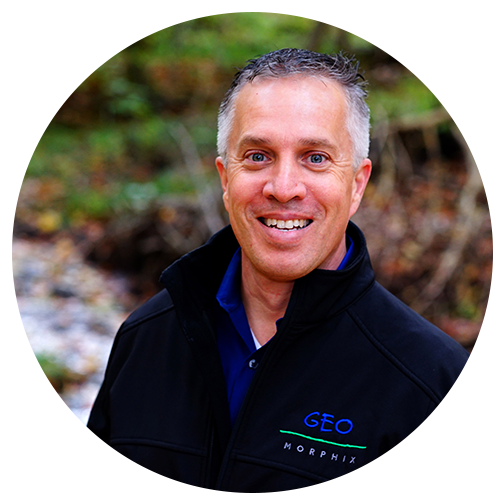
Paul Villard
Keynote Speaker
From Armouring to Adaptation: The Evolution of Erosion Control and Watercourse Management
Over the past 20 years, approaches to erosion and sediment control and watercourse management have shifted from largely static, prescriptive designs toward more adaptive, outcome-based practices. Early efforts often focused on fixed controls and structural solutions intended to resist change. Experience in the field has shown that construction sites and river systems are inherently dynamic, and that successful management depends on understanding and working with evolving conditions rather than attempting to lock them in place. For over thirty years, Dr. Villard has been involved in research related to geomorphology in fluvial, coastal and estuarian systems. His research has covered fundamentals of sediment transport, bedform and channel evolution, turbulence and hydrodynamics, field measurement techniques, urban impacts on rivers, and the evolution and habitat benefit of restored river systems.

Jennifer Lamoureux
Speaker
Creating Space for Nature: Lessons from the Kizell Wetland Restoration Project
The Kizell Wetland Restoration Project focuses on restoring natural wetland function and habitat within the Kizell Drain area. Using a nature-based design, the project recreated wetland cells with varied water depths, native vegetation, and habitat structures like root wads and fallen trees. These features support diverse species and promote long-term ecological resilience.
Jennifer Lamoureux is an Environmental Construction Manager with the National Capital Commission, where she brings energy, precision, and ecological insight to some of the Capital Region’s most dynamic public-realm projects. Based in Ottawa, she leads environmental oversight for shoreline infrastructure, bridge rehabilitations, wetland restoration, and habitat-sensitive construction across National Capital Commission lands.

Nick Schulz
Speaker
Erosion and Sediment Control in Canada’s Arctic: Challenges, Solutions, and Lessons Learned
As demand for critical minerals rises, Arctic development in Canada grows, posing unique erosion and sediment control (ESC) challenges. From 2023-2026, Kilgour & Associates Ltd. supported mining infrastructure in Nunavut’s Kivalliq Region.
This talk covers ESC challenges, solutions, and lessons from building roads, effluent lines, and deep-water ports, offering guidance to minimize environmental impacts in northern projects.
Nicholas Schulz is a Biologist specializing in aquatic ecology and land development consulting. Since joining Kilgour & Associates Ltd. in 2019, he completed his B.Sc. and M.Sc. in Environmental Science at Carleton University.
Nicholas is CAN-CISEC certified and conducts erosion and sediment control inspections on construction sites. He focuses on managing land development impacts on creeks, streams, and wetlands, supporting projects in Ottawa and environmental monitoring for mining in Nunavut.

Joel Kennedy
Speaker
Vegetated Wall Systems for Flexible, Permanent, Green Solutions for Slope Stabilization, Erosion Control, Retention/Detention, and Waterway Installation
Flex MSE is proud to be a world leader in vegetated wall and slope solutions. Utilizing globally patented geomodular block building technology and industry-leading best practices, Flex MSE creates permanent green solutions for grade separation, slope stabilization, erosion control, and waterway installations.
Joel Kennedy is the Business Development Specialist for Flex MSE. With over 12 years of experience in the civil geosynthetics industry, Joel Kennedy brings a wealth of technical expertise in roads, drainage, slope stabilization, and MSE/RSS systems. Having worked on global projects across diverse and challenging conditions, Joel understands the unique demands of each site and how to deliver practical, long-lasting solutions. Originally from the Greater Toronto Area, Joel now resides in central Canada, continuing to support innovative and sustainable infrastructure projects worldwide.

Mark Myrowich
Speaker
Building Living Soils: The Hidden Drivers of Successful Vegetation Establishment
Vegetation success depends on more than seed and fertilizer—it depends on the health of the soil system. This presentation explains how soil biology, nutrient cycling, and root-zone conditions influence plant establishment, particularly in disturbed or constructed environments, and how understanding these processes can lead to more resilient vegetation.
Mark Myrowich has been a key figure in erosion control since 1995, starting with Mid Canada Hydroseeding and founding ECBVerdyol (ECBV) in 2001 in Riverton, Manitoba. ECBV is now Canada’s largest manufacturer of erosion and sediment control products. Mark has served as a Directing Member of the Erosion Control Technology Council since 2002 and held leadership roles with the International Erosion Control Association, including Global Development Vice President.

Laurent Darveau
Speaker
Engineered Scour Protection with Solmax PROPEX® Scourlok®: Resilient, Vegetated Bank Stabilization
The Solmax PROPEX® Scourlok® system addresses growing challenges in hydraulic environments where traditional hard‑armoring solutions often fail to deliver long‑term scour resistance or ecological enhancement. Scourlok is engineered to withstand extreme hydraulic stresses through its rigid interlocking cells armored with Pyramat® 75 High Performance Turf Reinforcement Mat (HPTRM) and internally lined with MIRAFI® nonwoven geotextile, providing durable erosion control while supporting sustained vegetation establishment.
The system accepts a variety of infill materials—including reused on‑site soils—and can be installed below or above water, offering adaptable, cost‑effective protection for shorelines, streambanks, and hydraulic structures. Design considerations such as hydraulic loading, infill selection, and integration with complementary geosynthetic armoring solutions will be discussed. Field performance will be demonstrated through real‑world case studies highlighting Scourlok’s successful application in demanding erosion and scour conditions. Laurent Darveau is a professional engineer with over a decade of dedicated experience in the geosynthetics industry. As Engineering Business Manager at Solmax International—a global leader in geosynthetic manufacturing—Laurent specializes in advanced solutions for roadway and railway infrastructure reinforcement, erosion control, slope stabilization and retaining wall systems.

Eric Blond
Speaker
Eric Blond is an independent consultant with 30 years’ experience in geosynthetics and building materials. He has chaired key ASTM and ISO committees and served three terms on the International Geosynthetics Society Council. Eric has authored over 100 technical papers and teaches geosynthetics at École Polytechnique de Montréal. A registered professional engineer in Quebec and Alberta, he provides expert consulting and training worldwide, with extensive project experience across North and South America, Europe, and the Middle East.

Meaghan Dustin
Speaker
Erosion & Sediment Control – A real world tour of Ontario
After 40 years in business, with 12 CAN-CISEC certified staff, Aquafor Beech Limited will present real world examples of erosion and sediment control for river and creek projects, to stormwater management infrastructure including LIDs. Examples will include city-wide erosion hazard assessments, extensive creek works, innovative flow management, SWM pond and LID phasing, shoreline and marine works, and asset management; with an emphasis on established National Capital projects.
Meaghan Dustin P.Eng., CAN-CISEC and Emma Schiller, P.Eng lead the Ottawa office of Aquafor Beech Limited working on a variety of municipal, private, and public sector water resources and engineering projects in addition to contract administration and site inspection. Meaghan’s specialization in stormwater management and municipal infrastructure using Low Impact Development (LID) practices.

Emma Schiller
Speaker
Erosion & Sediment Control – A real world tour of Ontario
Meaghan Dustin P.Eng., CAN-CISEC and Emma Schiller, P.Eng lead the Ottawa office of Aquafor Beech Limited working on a variety of municipal, private, and public sector water resources and engineering projects in addition to contract administration and site inspection. Emma’s specialization in channel rehabilitation, restoration, flood and erosion risk mitigation, and infrastructure protection.
PROGRAM
|
8:00 – 8:45 |
Registration and Breakfast |
|
|---|---|---|
|
8:45 – 9:00 |
Welcome & Opening Remarks |
Chris Thomson, President CANIECA |
|
9:00 – 9:45 |
From Armouring to Adaptation: The Evolution of Erosion Control and Watercourse Management |
Keynote Speaker: Paul Villard, Geo Morphix |
|
9:45 – 10:30 |
Creating Space for Nature: Lessons from the Kizell Wetland Restoration Project |
Jennifer Lamoureux, NCC-CCN |
|
10:30- 11:00 |
Morning Break & Networking |
|
|
11:00 – 11:45 |
Erosion and Sediment Control in Canada’s Arctic: Challenges, Solutions, and Lessons Learned |
Nick Schulz, Kilgour & Associates Ltd |
|
11:45 – 12:45 |
Lunch & Networking |
|
|
12:45 – 1:30 |
Vegetated Wall Systems for Flexible, Permanent, Green Solutions for Slope Stabilization, Erosion Control, Retention/Detention, and Waterway Installations |
Joel Kennedy, Flex MSE |
|
1:30 – 2:15 |
Erosion & Sediment Control – A Real World Tour of Ontario |
Meaghan Dustin and Emma Schiller, Aquafor Beech Limited |
|
2:15 – 3:00 |
Engineered Scour Protection with Solmax PROPEX® Scourlok®: Resilient, Vegetated Bank Stabilization |
Laurent Darveau, ing, MBA, Solmax |
|
3:00 – 3:30 |
Afternoon Break & Networking |
|
|
3:30 – 4:15 |
TBA |
Eric Blond |
|
4:15 – 5:15 |
Building Living Soils: The Hidden Drivers of Successful Vegetation Establishment |
Mark Myrowich, ECBVerdyol |
|
5:00 – 5:20 |
Closing Remarks |
Chris Thomson, President CANIECA |
|
5:20 – 6:30 |
Happy Hour Social & Networking |
|
Thanks to our sponsors who are making this event possible