 Canadian Chapter of the International Erosion Control Association
Attendee guide for the 5th Annual Virtual CANIECA Cross-Canada Conference
Case studies on erosion control across Canada
- Date
- Thursday, September 24, 2026
- Live programme
- 11:00 am to 5:00 pm ET
- Lobby opens
- 10:00 am ET
- Replay
- On demand for 30 days
Joining on Zoom Events
Your personal access link was emailed to you after registration. Here is how to get from that email to the live room.
Open your access link
Find the email from CANIECA and open the link in the Zoom app or a current web browser. Check your spam folder if it isn't in your inbox.
Arrive in the lobby from 10:00 am ET
The lobby opens an hour early so you can settle in and test your audio and video. The programme begins at 11:00 am ET.
Open the Sessions tab
Once you are in the lobby, select the Sessions tab.
Choose the main session
Select Case studies on Erosion Control Across Canada to enter the live broadcast.
No link, or can't get in?
Request a direct link and we'll send one to you. This email goes straight to the IT tech desk.
Request a direct link services@gabrieldornier.comTake notes as you go
Every session has an Add a note button that opens your notepad with the session already labelled. Email everything to yourself at the end of the day.
Good to know
- All times in this guide are Eastern Time.
- Send questions to speakers through the Q&A or Chat panel during their session. The panel at 4:15 pm is open discussion.
- This guide follows the day in order. When a speaker returns, a link takes you back to their bio.
- Registration or programme questions: canieca.org/contact
The programme
One track from opening remarks to the closing panel, with two short breaks. The session on now is marked as the day unfolds.
Opening Remarks
CANIECA President Chris Thomson opens the day and welcomes attendees to the 5th Annual Virtual CANIECA Cross-Canada Conference.

Chris Thomson
CIHECP, President — CANIECA / President & General Manager, Maritime Hydroseed & Erosion Solutions
Chris Thomson is President and General Manager of Maritime Hydroseed & Erosion Solutions, a New Brunswick–based company with over 50 years of experience in erosion and sediment control, revegetation, and stormwater management across Atlantic Canada. A Certified Installer of Hydraulic Erosion Control Products (CIHECP), Chris brings a practical, field-driven approach to erosion control, with extensive experience on complex infrastructure projects including highways, airports, and environmentally sensitive sites.
Morning
Risk-Based Approach for E&SC in Seaton, Pickering
An overview of various risk-based assessments, including RUSLE, MTO, and TRCA hybrid approaches, applied to a development area in Seaton, Pickering.
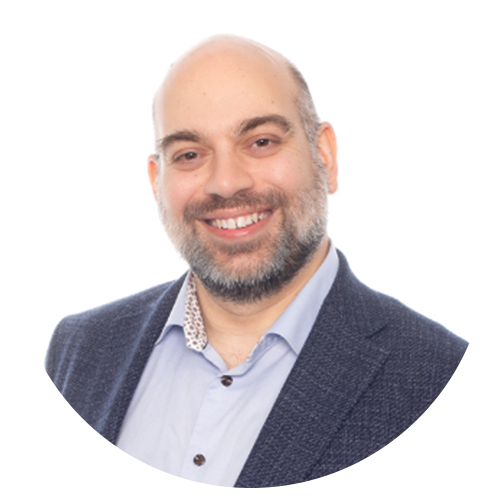
Andrew Fata
M.Sc. Eng., P.Eng. — Senior Associate, Water Resources, Urbantech® Consulting
Andrew Fata is a Senior Associate in Water Resources at Urbantech Consulting, where he oversees the firm's water resources engineering team and leads stormwater management initiatives across scale, from watershed and subwatershed studies to detailed design. His professional background spans nearly two decades of experience in hydrology, hydraulics, stormwater infrastructure analysis, and low-impact development design, with key roles in multidisciplinary planning and engineering teams contributing to subwatershed studies, environmental implementation reports, functional servicing studies, and infrastructure assessments across the Greater Golden Horseshoe. His work includes guiding engineering teams through municipal Class Environmental Assessments, master planning assignments, and infrastructure evaluations for both private and public sector clients. In addition to his technical role, Andrew contributes to broader organizational growth through business development, technology and innovation, marketing, standards development, and mentorship. His areas of specialization include land development, hydrologic and hydraulic analysis, open channel design, erosion and sediment control, stormwater management including LID, and servicing feasibility studies.

Since 1976 — A Creek Contractor's Perspective on the Industry
For nearly five decades, creek and waterway restoration has evolved from simple erosion control measures to complex, multidisciplinary projects that balance environmental stewardship, regulatory requirements, and constructability. Drawing on the lived experience of a contractor rooted in the industry since 1976, this presentation offers a practical, boots-on-the-ground perspective on how the field has changed — and where it is heading.
The session will highlight lessons learned from decades of field execution, including what works, what doesn't, and how collaboration between designers, regulators, and contractors can lead to more successful outcomes.
Attendees will gain a deeper appreciation for the contractor's role in delivering resilient, naturalized waterway solutions, and leave with practical insights that can improve project planning, design, and execution.
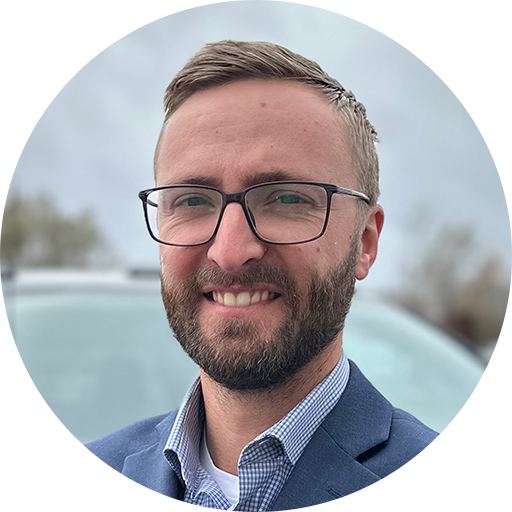
Jared Reinders
President/General Manager — R&M Construction
Jared Reinders is the General Manager at R&M Construction. He began his career in the field as a general labourer before progressing through roles in estimating, project management, and senior leadership — giving him a practical, well-rounded perspective on what it takes to successfully deliver environmental construction projects across Southern Ontario. As a third-generation member of the family-owned and operated company, Jared grew up hearing firsthand accounts of the projects, challenges, and innovations that have shaped both R&M Construction and the industry since the company's founding in 1976.

Enhancing the Soil and Plant Rhizosphere
Incorporating live, function-focused biological bacteria and bio-stimulants for fast and effective cover establishment.
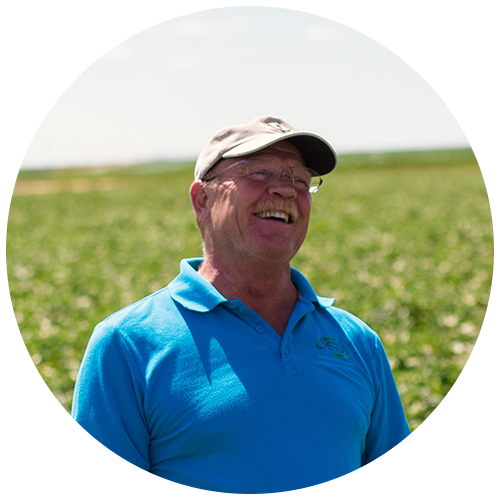
Scott Walker
Specializing in Soil and Plant Health — DSW Enterprises and Consulting Ltd.
Scott Walker has been in the agricultural industry for over 45 years. He started out in Southern Ontario with a team of horses on an organic farm in 1979, then studied at OAC Guelph before managing a conventional apple orchard integrating IPM and bio-stimulants. In 1995 he joined UAP, helped develop a nutrient line, and eventually made his way to Manitoba. In 2010, Scott started his own independent R&D company, DSW Enterprises and Consulting, whose primary role is to research and coordinate the R&D of biologicals and bio-stimulants across broad-acre agriculture, fruit and vegetables, and the turf industry. Scott's passion for soil and plant health — and his quest for research-based information — has earned him the nickname ‘Scotty “Data” Walker’. He will share his vast experience integrating soil sampling, nutrient balancing, and function-focused biologicals for enhanced soil and plant health.

Afternoon
From Inspection to Action: Effective Communication Strategies for Erosion and Sediment Control Monitoring
Erosion and sediment control (ESC) practices continue to evolve alongside advancements in construction methods and regulatory expectations. While technologies and design approaches play a critical role in managing site conditions, the success of ESC implementation ultimately depends on effective communication among project stakeholders.
This presentation highlights the importance of clear, timely, and coordinated communication between inspectors, contract administrators, contractors, and project owners in achieving successful ESC outcomes. Drawing from practical field experience, it demonstrates how consistent reporting, proactive dialogue, and collaborative problem-solving ensure that control measures are properly installed, maintained, and adapted throughout all phases of construction.
Real-world examples illustrate that there is no one-size-fits-all approach to ESC site management, and that miscommunication often poses greater risks than technical limitations. Ultimately, effective ESC monitoring is not just a technical exercise, but a communication-driven process. When all stakeholders are informed, engaged, and accountable, projects are better positioned to reduce environmental impacts while maintaining construction efficiency and compliance with permit requirements.
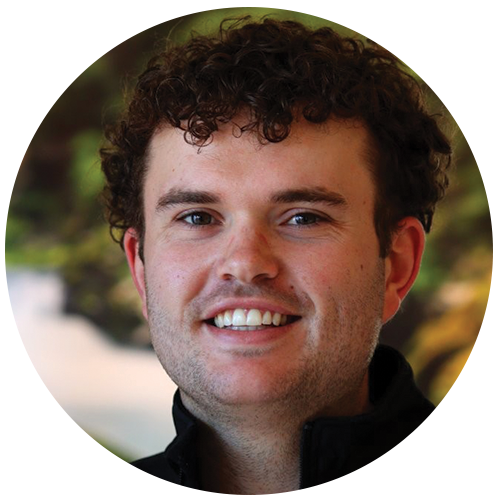
Wyatt Croucher
CAN-CISEC, EPt — Environmental Restoration Technologist, Project Lead, GEO Morphix Ltd.
Wyatt Croucher is an Environmental Restoration Technologist with experience supporting the planning, implementation, and monitoring of erosion and sediment control (ESC) measures, as well as natural channel and habitat restoration projects. Holding CAN-CISEC certification and an EPt designation, he combines technical expertise with a practical, field-based approach to support the successful implementation of environmental control measures on active construction sites. Wyatt has a strong working knowledge of regulatory requirements related to ESC and channel restoration projects across all phases, from pre-construction through to post-construction monitoring. His attention to detail and proven ability to communicate effectively with project stakeholders contributes to the successful implementation and ongoing performance of ESC, geomorphic, and restoration designs.
Parks Canada and Erosion to Cape Breton
Join Joel Kennedy from Flex MSE as he helps mitigate severe erosion and slope instability along Cape Breton roadways, driven by harsh weather, runoff, and challenging site conditions.
Flex MSE provides a durable, vegetated retaining solution that stabilizes slopes, controls erosion, and integrates naturally into the landscape — delivering long-term performance while reducing maintenance and environmental impact.

Joel Kennedy
Business Development Specialist — Flex MSE
Joel Kennedy is the Business Development Specialist for Flex MSE. With over 12 years of experience in the civil geosynthetics industry, Joel brings a wealth of technical expertise in roads, drainage, slope stabilization, and MSE/RSS systems. Having worked on global projects across diverse and challenging conditions, Joel understands the unique demands of each site and how to deliver practical, long-lasting solutions. Originally from the Greater Toronto Area, Joel now resides in central Canada, continuing to support innovative and sustainable infrastructure projects worldwide.

Emergency Creek Diversion and Restoration with Bioengineering: 15 Years and a Really Big Storm Event
In 2010 an inadvertent oil release adjacent to a fish-bearing creek at Viden, Manitoba required emergency mobilization from Ontario within 24 hours of the incident to isolate the spill zone and protect fish and fish habitat. Over the following 12 hours a solution was reached with the Department of Fisheries and Oceans (DFO) and Manitoba Environment to temporarily divert the creek and remove the entirety of the reach through the spill zone to facilitate containment and clean-up. As part of site restoration, a replacement reach was designed and constructed using natural channel design principles that leveraged bioengineering techniques.
The presentation discusses the challenges encountered during the initial response through to the development of a site restoration plan and channel reconstruction. Post-construction performance of the channel and riparian restoration are examined through time based on the initial two years of post-construction monitoring through to present day, including the channel's response to a massive (greater than 1:400) storm event in the third year.
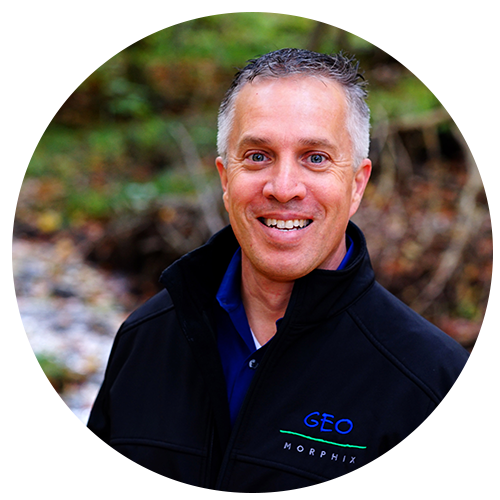
Paul Villard
Ph.D., Director / Principal Geomorphologist — Geo Morphix Ltd.
For over thirty years, Dr. Villard has been involved in research related to geomorphology in fluvial, coastal, and estuarine systems, covering fundamentals of sediment transport, bedform and channel evolution, turbulence and hydrodynamics, field measurement techniques, urban impacts on rivers, and the evolution and habitat benefit of restored river systems. He has applied his knowledge of sediment transport, hydrodynamics, and geomorphology to hundreds of projects in Ontario, as well as projects in Manitoba, Alberta, California, and the northeastern United States — including sediment transport studies, geomorphic assessments, stream and shoreline restoration, erosion assessments for stormwater management and dewatering projects, hazard assessments, and site remediation. He is a member in good standing of the Association of Professional Geoscientists of Ontario, Manitoba, Alberta, British Columbia, and the Northwest Territories and Nunavut.
Erosion and Sediment Control — Case Study (continued)
Chris Thomson presents a case study from a highway project where a collapsed culvert forced reconstruction of long, steep slopes beside the St. John River. He details how biotic soil amendments were combined with hydraulic erosion control to stabilize the slope, improve soil performance, and support vegetation establishment — offering proven approaches for managing erosion on steep, high-risk sites in environmentally sensitive, regulated areas.
Attendees will gain practical insights and proven approaches for managing erosion on steep, high-risk sites in environmentally sensitive, regulated areas.
Erosion and Sediment Controls for Northern Mine Site Care, Maintenance, and Remediation
Caroline Serhal draws on more than 20 years as a professional geoscientist across Ontario, the Northwest Territories, and Nunavut, including work as a key team member on two of the largest mine remediation projects in northern Canada. She shares the specific challenges — and what has worked — for erosion and sediment control in northern and mine-management settings.
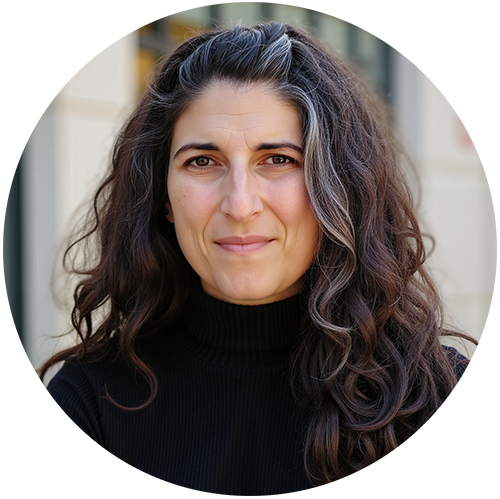
Caroline Serhal
P.Geo (NWT/NU, ON)
Caroline Serhal is a Professional Geoscientist in Ontario, the Northwest Territories, and Nunavut with over 20 years' experience managing projects, conducting environmental site assessments, and leading environmental regulatory compliance programs related to mine remediation, industrial, commercial, and oil and gas sites. As a former key member on two of the largest mine remediation projects in northern Canada, she has extensive experience in the challenges and successes of ESC in northern and mine-management settings.
Biodegradable vs. Non-Biodegradable BMPs
Traditionally, many, if not most, BMPs used in erosion control have been manufactured from non-biodegradable plastics. Recently, more research has been conducted, indicating the extent to which microplastics are entering the environment. This has sparked a discussion within our industry about the potential reduction in plastic use and which biodegradable alternatives are available. Today's discussion will cover where biodegradables are available as BMPs and where they make the most sense to use.
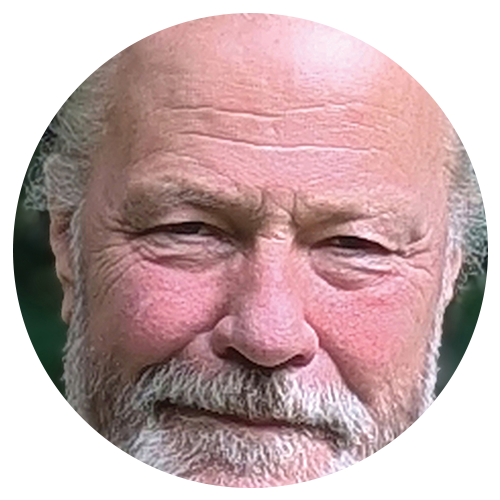
Jack Eaton
Carriff Engineered Fabrics
With over 35 years in the green industry and 20 years specializing in erosion control and site stabilization, Jack Eaton currently works for Carriff Engineered Fabrics, where he develops and promotes tubular fabrics for the erosion control industry. He has been involved in the manufacture, installation, and monitoring of compost socks and straw wattles, as well as in the development and implementation of site restoration plans involving hydroseeding, straw mulching, and straw blanket installation. Jack has also served as an on-site plan coordinator for several linear powerline projects, and has presented on topics related to erosion control throughout his career.

Panel Discussion
A closing panel bringing together perspectives from across manufacturing, agronomy, contracting, and materials — open discussion and audience questions on the themes of the day.
Chris ThomsonSee bio earlier in the day
Jack EatonSee bio earlier in the day
Scott WalkerSee bio earlier in the day
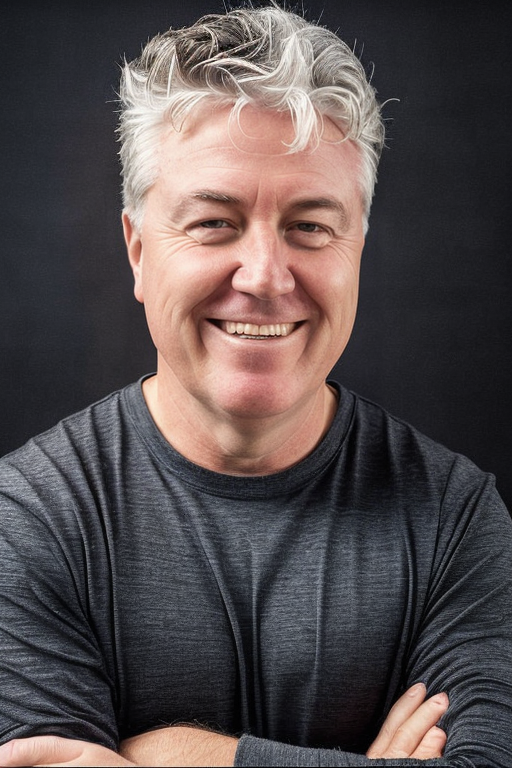
Mark Myrowich
CPESC, CISEC — Founder, ECBVerdyol (ECBV)
Mark Myrowich has been a key figure in erosion control since 1995, starting with Mid Canada Hydroseeding and founding ECBVerdyol (ECBV) in 2001 in Riverton, Manitoba. ECBV is now Canada's largest manufacturer of erosion and sediment control products. Mark has served as a Directing Member of the Erosion Control Technology Council since 2002 and held leadership roles with the International Erosion Control Association, including Global Development Vice President. He also contributed as Treasurer and Board Member for IECA's Canadian Chapter. With certifications including CPESC and CISEC, Mark focuses on innovation and biomimicry to improve reclamation methods, aiming to transform erosion control worldwide and enhance environmental management.
Closing Remarks
Closing remarks and thanks from CANIECA's President.
With thanks to our sponsors
This conference is made possible by the support of the erosion control industry.
Presenting sponsor

ECBVerdyol is proud to present the 5th Annual Virtual CANIECA Cross-Canada Conference.
Major sponsors


Sponsors


Copyright Canadian Chapter IECA Inc. Programme subject to change.
My notes
Saved automatically as you type.
Your notes stay in this browser on this device, even if you close the page. They won't carry over to another device or survive private browsing, so email them to yourself before you go.
